
How to Fix SSH No Matching Key Exchange Method Found
Resolve SSH key exchange negotiation failures by comparing client and server algorithms, updating legacy systems, and using narrow temporary compatibility settings.
Unable to negotiate ... no matching key exchange method found means the SSH client and server could not agree on an algorithm for establishing session keys. This often appears after a client upgrade disables obsolete algorithms that an older server or network appliance still requires.
Capture the offered algorithms
Run the connection with verbose output:
ssh -vvv user@example.com
The error normally includes a list such as:
Their offer: diffie-hellman-group1-sha1
Record the hostname, port, effective address, and offered algorithms. Do not assume the error concerns host keys: SSH negotiates key exchange, host-key signatures, ciphers, and message authentication separately.
Inspect the effective client configuration
ssh -G example.com | grep -E '^(hostname|port|proxyjump|kexalgorithms|hostkeyalgorithms|ciphers|macs) '
ssh -Q kex
ssh -Q kex shows algorithms supported by the client binary, while ssh -G shows those enabled for this destination after configuration is applied.
Check whether a host alias, included configuration file, jump host, or system policy changes the result:
ssh -G example.com | grep -E '^(userknownhostsfile|proxycommand|proxyjump) '
Verify that you reached the intended server
DNS, port forwarding, load balancers, and bastions can send the connection to an unexpected SSH implementation:
getent ahosts example.com
nc -v example.com 22
The banner should begin with SSH-2.0-. If multiple addresses exist, compare them individually. A different server version on one address can explain inconsistent negotiation failures.
Inspect server algorithms
With console access or another approved administrative path:
sudo sshd -T | grep -E 'kexalgorithms|hostkeyalgorithms|ciphers|macs'
ssh -V
sudo journalctl -u ssh -u sshd --since "30 minutes ago"
On appliances, use the vendor’s supported management interface. Confirm whether a system-wide cryptographic policy restricts algorithms independently of sshd_config.
The preferred permanent fix is to update the server or device so it supports modern algorithms. Enabling an obsolete algorithm globally weakens every client or server connection that can select it.
Use a narrow temporary exception
If access is urgently required to upgrade a trusted legacy host, append only the exact algorithm named in the error:
ssh -o KexAlgorithms=+LEGACY_ALGORITHM user@example.com
If that reveals a separate host-key algorithm error, treat it as another negotiation stage rather than enabling a broad legacy configuration.
Scope any compatibility entry to one host in ~/.ssh/config:
Host legacy-example
    HostName example.com
    KexAlgorithms +LEGACY_ALGORITHM
Avoid adding legacy algorithms beneath Host *. Document the exception, restrict network access to the legacy device, and set a removal date.
Diagnose it with Rumus
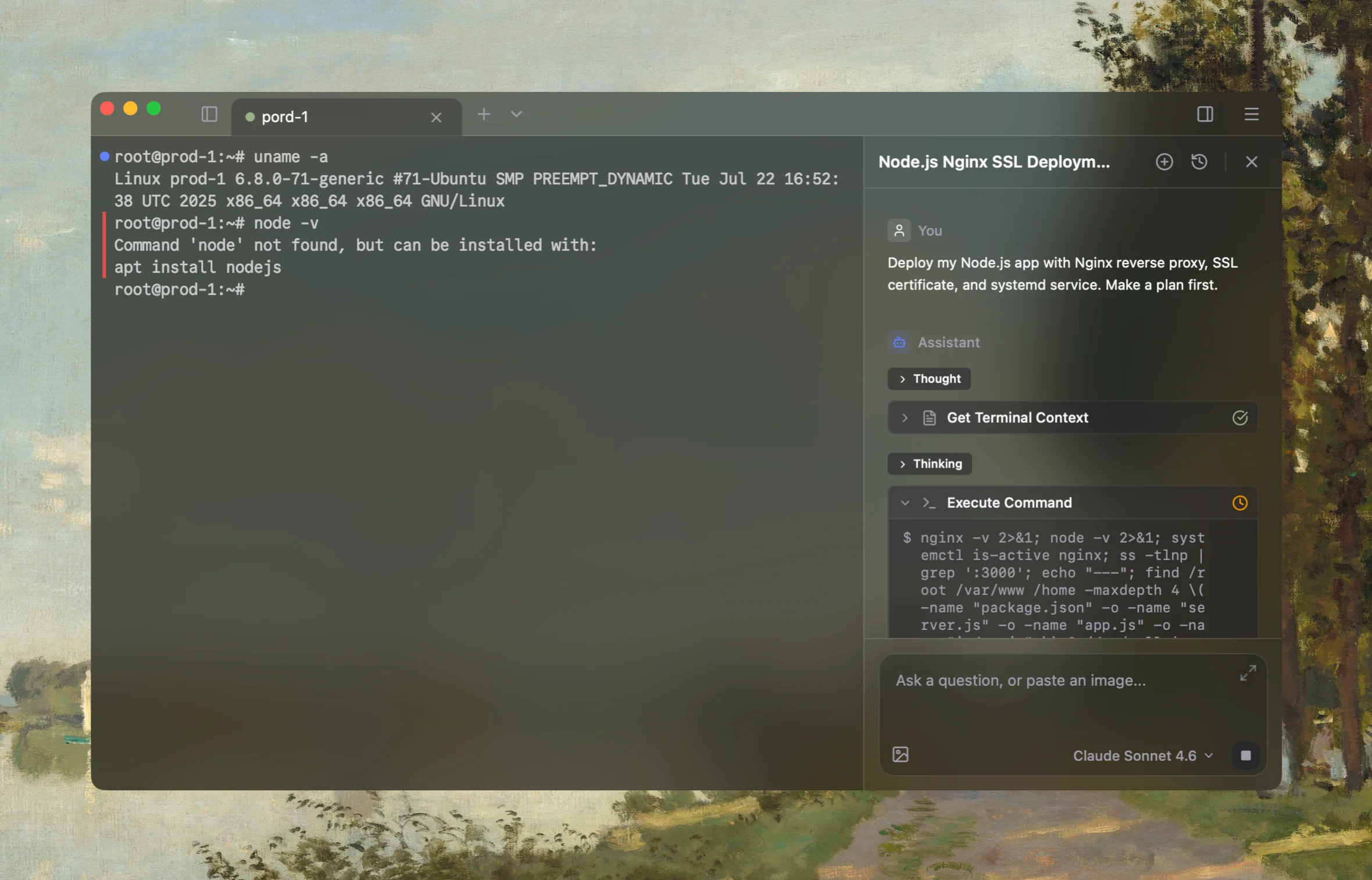
Rumus is an AI-native terminal that connects to your real SSH hosts and understands the active connection context. It can inspect SSH configuration, identities, network paths, and server logs instead of guessing from an isolated chat.
What Rumus can inspect
- SSH config, keys, and effective connection settings
- Jump hosts, proxies, ports, and network reachability
- Server authentication logs and file permissions
Diagnose this SSH no matching key exchange method error. Capture the algorithms
offered by the server; inspect the effective client configuration, supported
algorithms, address, port, proxy and jump-host path; and, if access exists, inspect
the server version, effective sshd algorithms, crypto policy, and logs. Prefer an
upgrade. Do not enable legacy algorithms or edit SSH configuration without approval.
Confirm the fix
Reconnect with verbose output and verify a modern key exchange is selected:
ssh -vvv user@example.com
Confirm authentication and a test command work through the original connection path. Remove any temporary client exception after the server upgrade and verify the connection still succeeds.
Open the server in Rumus and let the AI agent inspect context, propose a plan, and ask before it runs changes.