
How to Fix Kubernetes CreateContainerConfigError
Diagnose CreateContainerConfigError by checking pod events, missing Secrets and ConfigMaps, invalid keys, service accounts, volumes, and security context.
CreateContainerConfigError means Kubernetes could not assemble the configuration required to create a container. The image may already be available, but a referenced Secret, ConfigMap, key, volume, service account, or security setting is missing or invalid. The pod’s events normally identify the exact reference that failed.
Read the pod events first
kubectl get pod POD -n NAMESPACE -o wide
kubectl describe pod POD -n NAMESPACE
kubectl get events -n NAMESPACE --sort-by=.lastTimestamp
Look near the bottom of kubectl describe pod for messages such as:
secret "NAME" not foundconfigmap "NAME" not foundcouldn't find key KEY in Secret NAMEMountVolume.SetUp failedserviceaccount NAME not found
Do not begin by deleting the pod. A controller will usually recreate it with the same broken configuration, while the original events provide useful evidence.
Identify the owning workload
kubectl get pod POD -n NAMESPACE \
  -o jsonpath='{range .metadata.ownerReferences[*]}{.kind}{"/"}{.name}{"\n"}{end}'
Inspect the Deployment, StatefulSet, DaemonSet, Job, or other controller rather than editing the generated pod:
kubectl get deployment DEPLOYMENT -n NAMESPACE -o yaml
kubectl rollout history deployment/DEPLOYMENT -n NAMESPACE
Compare the failure time with a recent rollout, Helm release, GitOps sync, or secret-rotation event.
Check Secret references safely
List metadata without printing secret values:
kubectl get secret SECRET -n NAMESPACE
kubectl get secret SECRET -n NAMESPACE -o jsonpath='{range $k,$v := .data}{$k}{"\n"}{end}'
Confirm:
- the Secret exists in the same namespace as the pod
- its name matches exactly, including generated suffixes
- every referenced key exists
- the workload uses the expected Secret type
Secrets are namespace-scoped. A Secret with the same name in another namespace does not satisfy the reference. Avoid dumping decoded secret contents into terminal history, logs, or an AI prompt.
Check ConfigMaps and keys
kubectl get configmap CONFIGMAP -n NAMESPACE
kubectl describe configmap CONFIGMAP -n NAMESPACE
Compare envFrom, env.valueFrom.configMapKeyRef, and ConfigMap volume references in the pod template. A ConfigMap may exist while the particular key named by the container does not.
If optional: true is appropriate for genuinely optional configuration, set it deliberately in the workload definition. Do not make required credentials or configuration optional simply to get the pod started.
Inspect volume and projected sources
kubectl get pod POD -n NAMESPACE -o yaml
kubectl get pvc -n NAMESPACE
Review volumes sourced from Secrets, ConfigMaps, projected tokens, PVCs, CSI drivers, and downward API fields. Confirm each volumeMount.name matches a declared volume and that referenced items use valid keys and paths.
Some storage problems produce ContainerCreating rather than CreateContainerConfigError, so use the event message—not only the status label—to select the next check.
Verify the service account
kubectl get serviceaccount SERVICE_ACCOUNT -n NAMESPACE
kubectl get pod POD -n NAMESPACE -o jsonpath='{.spec.serviceAccountName}{"\n"}'
Confirm that the named service account exists. For private registries, also check that referenced imagePullSecrets exist and are attached correctly. Image credential failures often appear as ImagePullBackOff, but a missing configuration reference can fail earlier.
Review security configuration
Inspect container and pod security context:
kubectl get pod POD -n NAMESPACE -o jsonpath='{.spec.securityContext}{"\n"}{range .spec.containers[*]}{.name}{" "}{.securityContext}{"\n"}{end}'
Invalid user, group, seccomp, AppArmor, or runtime configuration can block container creation depending on the runtime and cluster policy. Correlate pod events with admission-controller, kubelet, and runtime messages before changing security controls.
Fix the source of truth
When the workload is managed by Helm or GitOps, correct the chart values or repository manifest rather than applying an ad hoc live edit. Otherwise, the next reconciliation may overwrite the fix.
Before applying, render or diff the proposed resources and verify names, namespaces, and key references. Creating an empty Secret or ConfigMap with the expected name can move the pod to a different failure while leaving the application misconfigured.
Diagnose it with Rumus
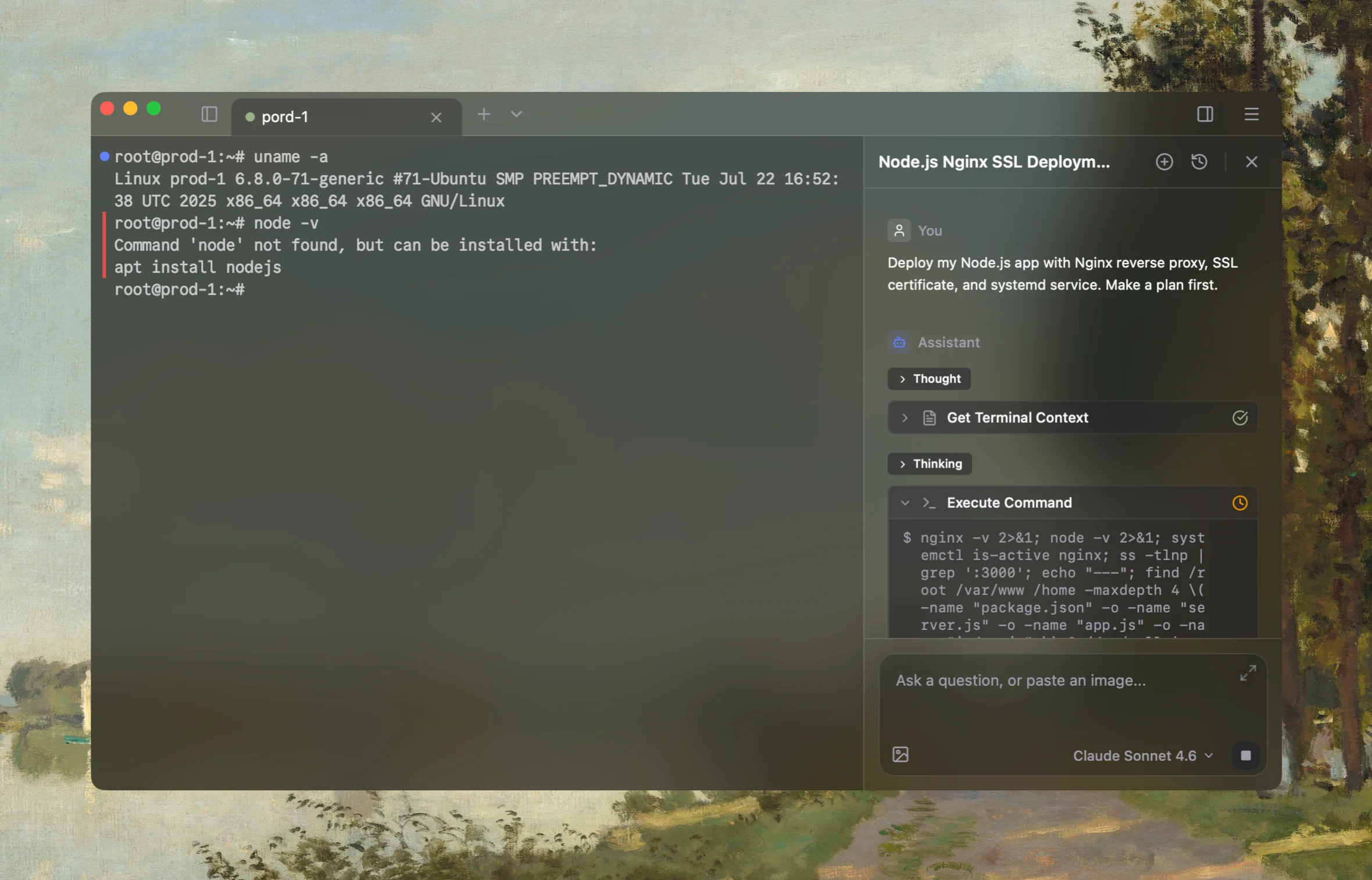
Rumus is an AI-native terminal that can use your current Kubernetes context to correlate pods, events, logs, controllers, resources, and nodes. It keeps the investigation read-only until you approve a proposed change.
What Rumus can inspect
- Pods, events, previous logs, and owning controllers
- Resources, probes, scheduling rules, and node state
- Secret-aware output and approval before cluster changes
Diagnose this Kubernetes CreateContainerConfigError. Inspect the pod events and
owning controller, then verify referenced Secret and ConfigMap names and key
metadata without exposing values, volumes and projected sources, PVCs, service
account, imagePullSecrets, security context, recent rollouts, and the declared
source of truth. Start read-only and do not delete pods, reveal secrets, or edit
cluster resources without approval.
Confirm the fix
After updating the approved source of truth:
kubectl rollout status deployment/DEPLOYMENT -n NAMESPACE
kubectl get pods -n NAMESPACE -o wide
kubectl describe pod NEW_POD -n NAMESPACE
Confirm the new pod passes container creation, becomes ready, receives the intended configuration without exposing secret data, and produces no recurring warning events. Verify the next GitOps or Helm reconciliation preserves the fix.
Open the server in Rumus and let the AI agent inspect context, propose a plan, and ask before it runs changes.