
How to Debug a Docker Container That Keeps Restarting
Break a Docker restart loop by inspecting container state, exit codes, logs, health checks, configuration, and resource limits.
A Docker container restarts because its main process exits and a restart policy starts it again. Preserve the evidence before recreating the container.
Inspect state and exit code
docker ps -a --filter name=my-container
docker inspect my-container --format '{{json .State}}'
docker inspect my-container --format '{{json .HostConfig.RestartPolicy}}'
Common exit codes include 1 for an application error, 126 or 127 for command problems, and 137 when the process may have been killed for memory pressure.
Read logs from the failed run
docker logs --tail 200 --timestamps my-container
If logging is empty, confirm that the application writes to stdout and stderr. Inspect Docker daemon events as well:
docker events --since 30m --filter container=my-container
Check memory and health status
docker inspect my-container --format '{{.State.OOMKilled}}'
docker inspect my-container --format '{{json .State.Health}}'
A health check does not normally restart a standalone container by itself, but orchestrators and external automation may act on it.
Compare configuration
Review the effective command, entrypoint, environment, mounts, and user:
docker inspect my-container --format '{{json .Config.Cmd}} {{json .Config.Entrypoint}}'
docker inspect my-container --format '{{json .Mounts}}'
Do not paste secret-bearing environment output into tickets or public logs.
Diagnose it with Rumus
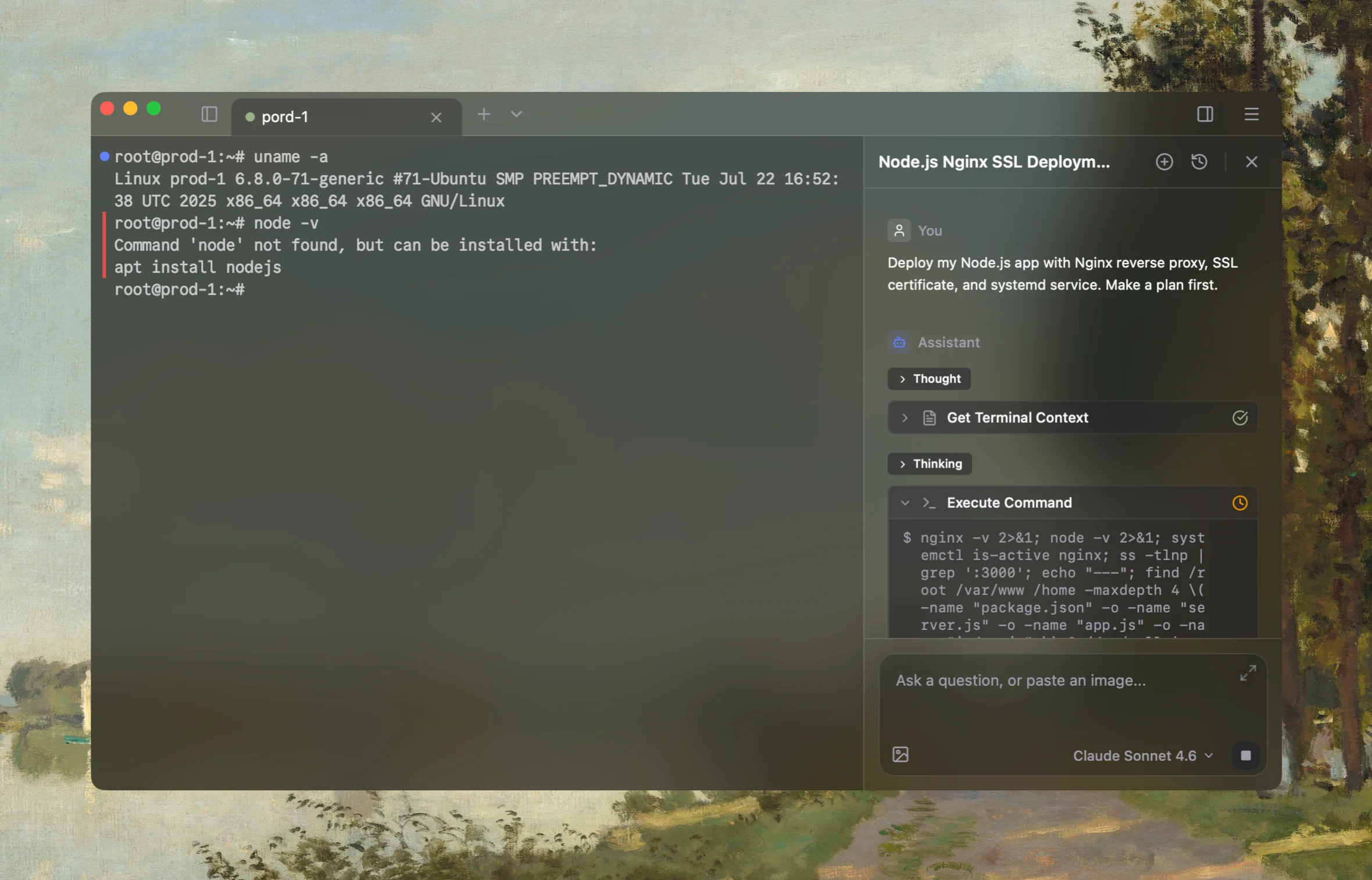
Rumus is an AI-native terminal that can inspect both Docker and its Linux host in one workflow. It connects container state, logs, mounts, networking, and resource limits so you can fix the cause without blindly recreating workloads.
What Rumus can inspect
- Container state, exit codes, logs, and health checks
- Images, mounts, ports, users, and restart policies
- Host resources and Docker daemon context
Diagnose why my-container keeps restarting. Inspect its state, exit code, restart
policy, recent logs, OOM status, health check, command, mounts, and relevant Docker
events. Redact secrets and do not recreate or stop the container without approval.
Confirm the fix
Deploy the corrected configuration and watch more than one restart interval:
docker ps --filter name=my-container
docker logs --follow --tail 50 my-container
Verify the application endpoint, not only the container’s Up status.
Open the server in Rumus and let the AI agent inspect context, propose a plan, and ask before it runs changes.