
How to Debug Kubernetes CrashLoopBackOff
Find why a Kubernetes container repeatedly crashes by checking pod events, previous logs, exit codes, probes, configuration, and resource limits.
CrashLoopBackOff means a container repeatedly starts, exits, and is restarted with an increasing delay. Kubernetes is reporting the restart behavior; the exit reason is usually in the container state, previous logs, events, or probe configuration.
Describe the pod
kubectl describe pod POD -n NAMESPACE
Inspect Last State, exit code, restart count, conditions, and recent events. If the pod has multiple containers, identify the one that is restarting.
Read logs from the previous container
The current container may be too new to contain the failure:
kubectl logs POD -n NAMESPACE -c CONTAINER --previous
kubectl logs POD -n NAMESPACE -c CONTAINER --tail=200
Do not publish logs without checking them for credentials, tokens, customer data, or connection strings.
Interpret common exit reasons
OOMKilledor exit code137: inspect memory usage and limits.- Exit code
1: read the application’s first meaningful error. - Exit code
126or127: verify command, image, and executable permissions. - Successful exit code
0: the workload may be a job incorrectly managed as a Deployment.
Check probes and configuration
kubectl get pod POD -n NAMESPACE -o yaml
kubectl get events -n NAMESPACE --sort-by=.lastTimestamp
Check command, args, environment sources, mounted ConfigMaps and Secrets, working directory, and liveness/startup probes. A liveness probe can restart an application that simply needs more startup time.
Diagnose it with Rumus
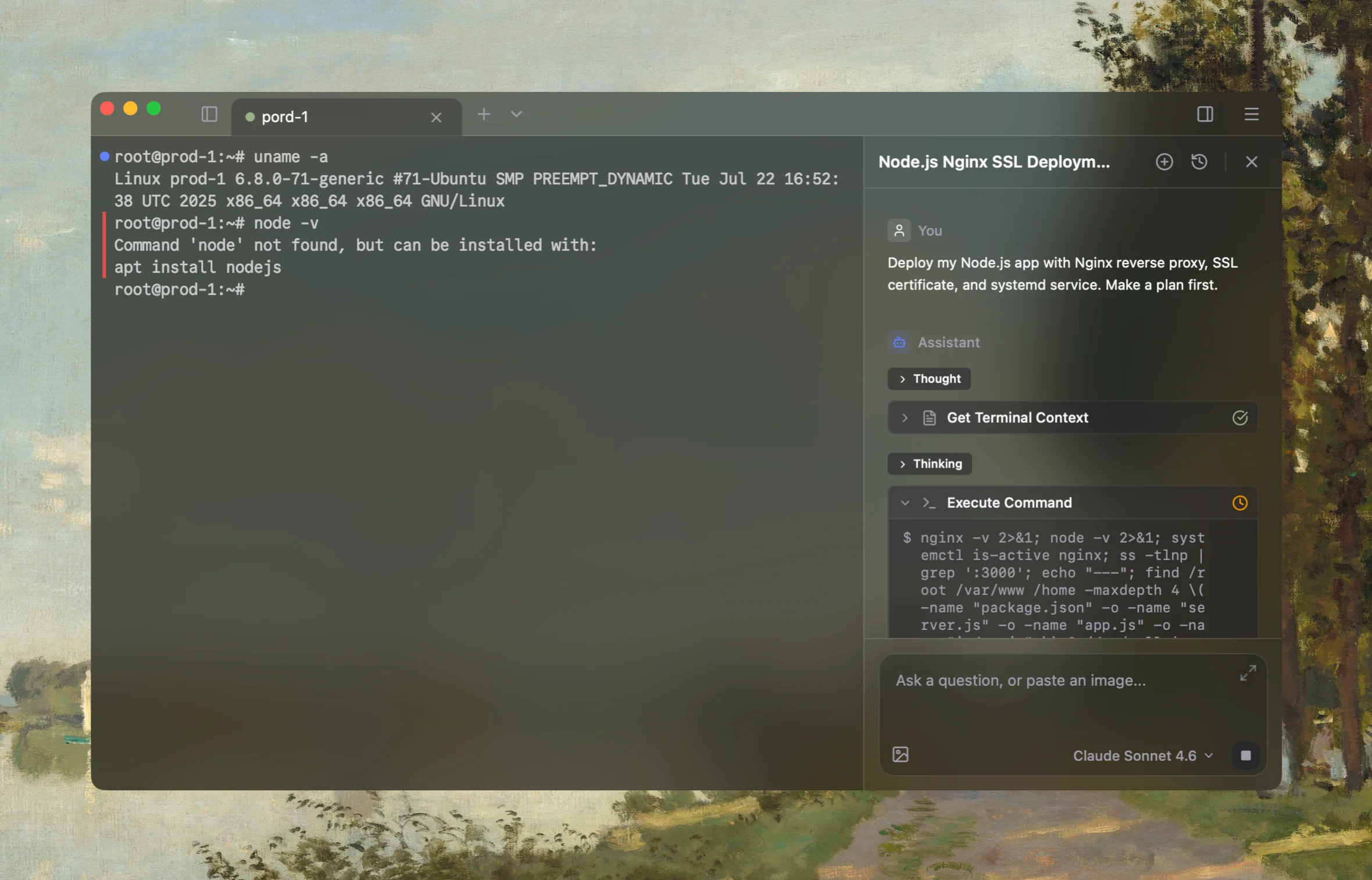
Rumus is an AI-native terminal that can use your current Kubernetes context to correlate pods, events, logs, controllers, resources, and nodes. It keeps the investigation read-only until you approve a proposed change.
What Rumus can inspect
- Pods, events, previous logs, and owning controllers
- Resources, probes, scheduling rules, and node state
- Secret-aware output and approval before cluster changes
Diagnose this CrashLoopBackOff in namespace NAMESPACE. Inspect pod state, previous
container logs, events, exit reason, resource limits, probes, command, and mounted
configuration. Redact Secret values. Start read-only and do not restart, delete,
scale, or edit the workload without approval.
Confirm the fix
After changing the owning Deployment, StatefulSet, or other controller:
kubectl rollout status deployment/NAME -n NAMESPACE
kubectl get pods -n NAMESPACE -w
Confirm that restart counts remain stable and that the application passes its real health checks.
Open the server in Rumus and let the AI agent inspect context, propose a plan, and ask before it runs changes.